Does the word that just popped into your head show up here? Find out:

Showing posts with label nature. Show all posts

13 October, 2014

Posing Mantis


First, I just saw flitter-flying, like a faerie from Pan's Labyrinth, sunlight on long wings. When it landed, I saw a praying mantis. Not preying as far as I could tell. Just posing.

22 April, 2014

I Heart Microbes


Spring continues to burgeon. The flowers and en-leafening branches are only the most obvious evidence. Underfoot, though, the soil swells as microbes kick into high gear. Without their action, the plants would sit and starve.

Meanwhile, in a cabinet under the counter, acetobacters transform liquid leached from the neighbor's leftover juice pulp into some tangy amber vinegar. The photo above is a slightly color-enhanced shot of the flocculant mat that covers the surface, which as an added gift formed a heart shape. Heart Shaped Floccs--you gotta take your Nirvana where you can get it. 

08 April, 2014

I Guess You Can Call it "Work"

Call it Shooting Star, Dodecatheon, or Curlew's Beak, it's blooming this week

Monday, 5:15 AM.  The alarm on my phone buzzes, ending the fantasy that my wake-state could be followed by more shut-eye. There's but a single working clock in the house--definitely not in my room--but it seems like on the rare occasions when I set the alarm, my body gets a jump on the electronics. Maybe because it's usually prelude to fieldwork, and I love fieldwork.

6:26 finds me on the road, half a pot of coffee in my belly, and the other half in various travel vessels. I used to hate driving, but back then a trip of any length involved Interstate 95, too many lanes, and essentially no variation in the scenery: shrinking forest, burgeoning burbs, and Cracker Barrels. Today, I face a couple hundred miles of I-90, but it will rise into grand stands of conifers, pass through snowy crags, descend into elks among pines, wind through smaller hills, blow past windmills and orchards, shoot along fields, and finally let me exit into a forgotten town just in time for lunch. Then, from arterial to lateral to a gravelly capillary, not another vehicle in sight.

12:12 PM, and I am standing by the women who planned the project and will operate the machinery. My job is to watch and see if any archaeology turns up. Monitoring, as this work is called, is an exercise in bi-polarity, similar to descriptions I've read about being a soldier at war. Mostly nothing (or worse yet, senseless fulfilling of duties with no plausible reward), and then MAYHEM! No incoming artillery for the archaeological monitor, just the skull rolling off the excavator bucket, and the prospect of being universally reviled while trying to navigate a path that will satisfy interests deeply at odds.

2:02 PM rolls around, and it's clear that this project will only have the monotony pole. They're digging through what turns out to be silt dug out of roadside ditches and dumped here, and will never get down to the original soil. I decide to go walkabout and check out what I can of the 1 square mile of property.

4:24 in the afternoon, and by all rights I could knock off and head for the hotel, having turned in more than the 8 hours I'm supposed to. But I keep walking. I've already recorded one site--just a collection of 100-year-old trash, but something beats nothing--and feel like walking further. So I meander out toward where a 19th Century map said there was a wagon road. Plenty of daylight left, and this far from Olympia, I am loathe to stop. Who knows when I'll be here again?

6:36, in what even in the post-Equinox period must be considered evening. Besides flushing out a coyote (every outcrop in this place has the gnawed bones of some creature eaten by a coyote, along with a celebratory poop), I found a site that seems to have been a rest stop on the wagon road. Bottles of booze and medicine (i.e., booze with an excuse), cans capped with solder, tobacco tins, and so on. The older the glass in the Northwest, the prettier: aqua with bubbles of 19th Century breath and air, once-clear glass tinted purple by the marriage of sunbeams and manganese.

7:27 PM, and I'm nearly back to the truck, having noted an oddly elaborate fence post and a culvert passing beneath an old rail grade along the way. Normally, there is nothing less fascinating than a culvert, but in this case, it was made with a beautifully glazed terra cotta pipe, frags of which I'd seen before dumped at the depot. Wondering what the hell that fine pipe was doing out here had been bugging me for the past couple of weeks, and now I know. The Chicago, Milwaukee, and St. Paul railway did not skimp, even out here near the end of a decidedly minor capillary. Plus, this culvert seems like a nice den for some critter, and I am a big fan of the reversion of civilization to wildness. [Oh, and I did have time to check out the monitoring site, confirming that it would have been a waste of time to stay put.]

8:38, and it's pretty much dark. I've driven to the hotel (40 more miles of driving this day), and am in search of food. The options in Moses Lake for late dining are limited, and I end up at Safeway. Besides dinner, I now have tomorrow's lunch and some beer, in case I am awake enough to drink it when I get back to the hotel.

9:36 PM. I should be asleep, but instead I stay conscious for a while longer. I call the kids and learn about their day, enumerate the animals I have seen. No writing, but I check out my sister's blog. I even watch some TV, an exotic experience, and luck out with an episode of South Park about Haoles and "Native" Hawaiians. Yes, it is late and I am loopy, but it's hilarious, even though I forgot to drink the beer.

11:11 PM (plus or minus). I close my eyes and drift off, meadowlark song echoes in my ears, visions of purple glass and lines of shorn wheat on my lids.
So, that's one day, much abridged. Lots of driving with sub-par radio choices. Lots of walking while being whipped by winds carrying grit. Easily more than 12 hours of "work," but nothing I would change. I saw a lot, got to know some new ground as you only can at walking pace, and didn't have to deal with any monitoring emerencies. From my employer's perspective, I managed risk and kept them legal. For me, though, it was mostly fun.

I'm still amazed that I ended up this way, doing what I do. It's tempting to take credit and claim it was all the plan, but there are any number of junctures at which random chance changed my career path. The most I did was recognize the right times to pounce on opportunities. And now, whatever time of day, I find myself pretty happy with what I do for a living.

30 March, 2014

Silence of the Dams Lifted (Temporarily)

Emergence.

Recently, I walked what had been the bottom of a lake for the past 50 years. A crack had appeared in the dam plugging that stretch of the Columbia, and as a precaution, the lake had been mostly drained. The fat placid bullfrog of a lake became a snake, flaccid flow replaced by rapids.

Shallow soundings, deep sounds

With the water level dropped, rocks and riffles raise their voices.  The Big River (translation of many Tribes' names for the Columbia) sings its song for the first time in decades. Some say that there's a stretch just below the Priest Rapids dam where the river runs free, but for the most part, the Oregon/Washington part of the river (hundreds of miles) has lost its voice in the age of hydro-electric power and irrigation diversion. Hearing riffles and rapids amounts to time travel, and I was lucky enough to hear that past, now. 

One goose says to another...

With the Columbia back in it's channel, creatures from geese to archaeologists walk the flood plain again. Minus the muffling waters, footsteps echo, gravel slips and crunches. The old fords become visible again, instead of dark placid waters crossed only by bridges and damns. 

Threatening to fight, even in death.
On the other hand, dropping the level of a dam lake leaves a lot of creatures accustomed to the sodden past 50 years high and dry. What the photos don't convey is the smell of millions of mussels rotting in the Spring sun, the stench of crayfish turning to rotten goo in their exoskeletons. Weirdly, there was little evidence of gulls and crows Columbia Gorging themselves on this buffet. No wheeling and squawking birds, and the aquatic critters even more silent than usual.

Hopefully, I'll get back again before the dam is fixed, and waters rise again to swallow the roar of rapids, the rhythm of riffles.

19 February, 2014

The Real Paleo Diet

Keep walking, paleo dudes; it's bound to warm up someday.

Because I procrastinate, other people have beat me to the punch, but rest assured that this archaeologist has had it in for The Paleo Diet (TPD) since first learning that it was not a joke. The book, the fad, and the spin-offs have as much to do with the actual diet of Paleolithic peoples as Indiana Jones has to do with the Nazi-free tedium of actual archaeology.

The ideal is that if we ate like our early human (or pre-human for that matter) ancestors, we'd avoid being diabetic lardasses. TPD's inventor, Loren Cordain, has a PhD in health, and I suppose I could snipe at his utter lack of awareness of what Paleolithic people actually ate (and more importantly, I hope you will see, what they did to procure those calories), or lower myself to the credentials attack so favored by archaeological and other academics.

But instead, let's just take a look at where The Paleo Diet fails to be the paleo diet. Let's see what it really took to feed ourselves in the pre-agricultural world.

First off, nearly all of the fruits and veggies that you can gorge on in The Paleo Diet, well, they didn't exist in the Paleolithic. As a phase of human development, despite its many accomplishements, the Paleolithic is adamantly non-agricultural, so much so that archaeologists inserted the Mesolithic as a buffer, just to make sure that any latent or proto-agricultural pursuits (selecting, seeding, and weeding of wild food patches, for example) were excluded from the early times. You want to go Paleo? Then forget the "fruits and veggies" allowed by Dr. Cordain, because nearly all of them are from species domesticated over generations by post-Paleo peoples. Eggs? Not unless you grab 'em from under a wild bird or reptile (or monotreme, I guess, if you live down under). Macadamia nut oil? You've gotta be kidding.

Hooray! A wild berry; just don't eat it all at once.
Modern Americans tend to think of unfamiliar and ethnic-sounding foods as more primitive/pristine, but many of them still fall far short of being Paleo. Acting like your quinoa concoction is "wild" is an insult to the Inca (and before them, Wari and Tiahuanacu) farmers who domesticated it, and to the hippies who continue to grow it up north. Go gather goosefoot yourself, if you want something less sullied by the selective hand of man.

But the list of what you can eat and be Paleo is only part of the argument for TPD's bullshititude. A roster of  What Thou Shall Not Eat to remain truly Paleo makes the strictures of Leviticus look easy. No crops, no domesticated animals, and sure as hell no mammal-milk from the wild creatures (defined as: everyone but mom).

Paradoxically, the Paleo person may also have had more choices than the Kosher observant, if only because we have no clue about religious strictures in the way distant past. You are hungry, and you spy some crayfish or lizards,...you eat them. If you die soon after, your smarter relatives avoid those species. If your life consists of wandering the earth in search of food to simply remain standing, your religion may have more to do with Thanks than with Rules.

Speaking of wandering, get used to it. A key component of Paleolithic nutrition is walking. Needless to say, no catching a bus to the store or even driving to your favorite foraging spot. Sadly, being in modern America, it must be pointed out that there would be no horses, dinosaurs, or other mounts to relieve your feet. Trekking across the land, searching for food, hauling it back home, and doing all the prep with tools you have to make  yourself,...takes a lot of energy. Be careful not to burn more calories than you can hunt or gather (but Rejoice! for all this walking keeps you trim and slim). Oh, and be ready to pull up stakes and move camp a few times a year, because hunting depletes game, and plants grow where they want, not where you would consider it convenient, oh ye pre-agricultural Paleo person.

And speaking of housing, your only heat is a fire, the fuel for which must also be gathered, which may involve a lot more walking, returning with heavy loads. Then you stoke the fire in your cave or saplings-and-bark or whalebones-and-sod dwelling. Hope your Paleo food is healthy, because you will be in close quarters with other humans and their ailments, not to mention the constant smoke from the fire.

So, are we clear? The real Paleolithic diet is probably pretty damned healthy, assuming you don't eat a toxic plant or mollusc, and that your hovel-mates are healthy, and that you are killed suddenly in a hunting accident before lung disease kicks in. But anything touched by the hand of man, not just processed, but domesticated, is a sham. Anything bought rather than hunted or pulled off the landscape? Nope. A life of constant walking, clothing yourself in what you can tan or weave, eating what you can find,...that life is probably going to give you a healthy body until a mastodon rips you a new one, or years of breathing sand and smoke chokes you, or whatever.

Or, you can feast on spelt and walnut oil, broccolini and mangoes. There are plenty of healthy ways to subsist. Just don't call it Paleo until you've doing it with your own stone and bone tools, and eating only the wildest of foods in your humblest of abodes.

18 January, 2014

Ice Zoom


From 50 miles away, glaciers may gleam, but ice's intricacy is expressed simply as a reflection of the underlying landscape and overlying light. This shot is from Paddle Park in Olympia, but a spate of recent fieldwork (yes, replacing culverts so fish can get through is a good thing; no, it would not be good to take out an archaeological site in the process) got me in the neighborhood of some pretty ice, expressing a few of its many moods.


A cool thing about frozen water is that sometimes you can glimpse the crystal structure on a pretty large scale, no magnification required. Here on this beaver pond, the freezing surface is only a few millimeters thick, but there are lines a couple of feet long, shooting out in all directions, weaving a web over the whole surface. Between the lines, smooth mirrors of the frozen stuff.


On another beaver pond, the glassy interstices were few. The whole surface was adorned with slivers and feathers of ice.


Meanwhile, by a stream, the spray of a small fall gets locked to a twig in blobular clusters. Not crystalline at all to the naked eye, more like ginseng roots or some other living thing.
 

09 January, 2014

Not-so-tiny Bubbles, in the Brine


The other day at high tide, I kept seeing little geysers of bubbles working their way to the surface. More so from the gravel than the mud, but not just emanating from the rocks, where you would expect the instices to harbor air until the relentless tide forced them to exhale. As if from a pod of tiny sub-benthic whales, a spout would appear, then peter out, only to appear somewhere else.


As a kid, growing up near swamps and lakes where turtles lurked--and not just harmless sliders sunning on logs, but big cooters waiting to snap off the supposedly worm-like toes of kid--someone in the pack would always identify bubbles as a big snapper. We'd tiptoe across fallen trees, but keep our fearful feet high and dry. Now, I'm more inclined to suspect decaying plants, farting, especially if it's a place where I happen to know that organic material was recently buried. Besides, any turtles caught in Puget Sound in January are not gonna be breathing.


The simplest explanation is that this was a really high tide, and when the ocean over-runs land, air makes it's way out of not just the interstitial spaces in gravel, but from burrows, worm-holes, old root channels, and all the other disorderliness that happens in the living soil.

Trouble focusing? It's not you, It's The Water.

The simplest explanation is often right, and no doubt it had something to do with all the tiny bubbles in the brine, escaping, amassing, and enlarging before drifting off on the ebb or effervescing into air. But leaning in for a closer look, another answer could be seen. Where bubbles rose, the water swirled, its transparency changed to a thousand warped tendrils. This is fresh water entering salt, rain that fell a day or month or decade ago coming to the surface. Any other day, this water would seep slowly, maybe even stick to itself just below surface, but with a half foot of saltier water above, fresh water joins the bubbles in an eruption. Eventually it mixes, helping the South Sound keep it's corner of the sea a low-salt haven. Ah,...sweet entropy.


08 January, 2014

The Highest Tide

Mission Creek, King Tide 2013

This past weekend, Puget Sound experienced the "King Tides," the highest tides of the year. According to the NOAA tide prediction tables, the Olympia Shoals station would reach 16.56 feet on Saturday, and 6/100ths lower on Sunday.

Olympia author Jim Lynch, it so happens, wrote a novel set here that he called "The Highest Tide." It's a great book, for many reasons. Way down the list for most people, but interesting to me, is how the titular event, a very high tide, fails to conform to predictions, but enlists a low pressure system and prodigious rainfall to flood above expectations. Something similar happened last year, when February's highs exceeded January's braggy "King" tides. Tides are set in motion by gravitational forces in our solar system, and as such are events that we can track with physics and math, but only to a certain precision, beyond which accidents of history hold sway.

Budd Inlet, 8:08 AM, January 4, 2013

This January, we were influenced by high pressure, and there had hardly been any rain at all, so maybe it was just a Jack Tide. Still, dozens of people showed up downtown, where they could see the floating docks at Percival Landing approach a horizontal state. Surely there are plenty of photos of downtown king tides online, among which I will point to these, because they show the nearly 20-foot rise that occurred between the midnight low (-2.99 ft) to the morning high (16.46 ft) on Friday.

The center of this shot is usually dry land.

My photos are from the mouth of Mission Creek, at the south end of Priest Point Park. I went there Saturday alone, and Sunday with the kids, and each time there were just a couple of other people. With the tide this high, the beach disappears, and a fair amount of the spit takes a dive. Last time the kind tides came round, they had to force their way through a culvert and into a silt-clogged former estuary. For many decades, that was how it went, a grand natural flow imprisoned in a 3-foot concrete pipe.

This time, the Salish Sea flowed free through a channel. This was because in 2013 the culvert was ripped out, the road berm damming (and damning) Mission Creek was dug up and hauled away, and a new channel was excavated. Designed by an engineer, and maybe not where the channel had been before it was covered, but the goal was restoration of the natural system, rather than creating space for real estate development or growing a crop that does not belong there. It is a well-intentioned fake.

As high tides sweep in and low tides flush out, the estuary may change. Silt once sequestered behind the buried sand spit will slither down into Budd Inlet, the channel may migrate, and the spits advance and retreat from either side. Critters will come in and explore the mud, and plant remains will hitch rides out on freshets and ebbs. The abrupt line of gravel laid out according to contract specifications may spread out and soften, or maybe the layer of bricks and rubble once buried by the modern beach will re-emerge. Who knows? It will be interesting to watch as the tides and other forces sculpt this work of man imitating a work of nature.

01 January, 2014

Obligatory New Year Post

The cycle continues

For Americans, this is the day of the New Year, an occasion to reflect and resolve, to mark the cycle's turn. In places where people did not dump the moon for a calendar solely solar, the New Year comes later. For me, the Winter Solstice is when one year clicks over to the next, and this Gregorian conceit that begins the new year a week and a half later means little.

But, it does come with a day off work, and therefore some time to write. Maybe also to reflect backward resolve forward.

The grimacing corpse of 2013
Looking back,...I'd rather not. The first year of the new Baktun (what? nobody wants to use the Mayan calendar now that it does not portend the End of Everything?), was not great. Coulda been worse, though, and I guess bad years just help make the other ones look good, and whatever dies becomes the soil for future fecundity. Not that I'm a relentlessly positive person, mind you; it's not as much "If life gives you lemons, make lemonade" as it is "If life dumps a load of shit at your door, make compost."

This year's run transmogrifies into a monster and fights itself to death, but also creates a new round of growth and life.
Looking forward,...I guess I'd rather not do that either, except in the most general way. I have no specific resolutions other than to continue trying to make the patch of earth I occupy a bit better. The compost should come in handy.

Ugh. All I really wanted to do today was post these photos of the 2013 chum salmon run on Kennedy Creek (photos date to a few weeks before the Solstice). Maybe I should have written nothing, instead of risking this maudlin run into a Message. Maybe I should just stop now and leave you with New Years Resolutions by Greg and Teddy Wayne (via McSweeney's):

  • 640 × 480
  • 800 × 600
  • 1024 × 768
  • Get into jazz

Happy New Year, whenever it begins. 

11 November, 2013

Nature Show in the Yard*


My, what sharp shins you have. Note a fortuitous blade of grass for comparison.

In the wilds of,...my front yard, the hunter became the hunted. Cliche, but true, all conveniently presented on a grassy lawn with no obstruction, and anough time to grab my camera.

I was just arriving home, when I heard a violent screeking, and looked over to see a small hawk pinning a starling to the ground by my doorstep. In no mood to share her prey, she flew over to the neighbor's yard, where it became evident that this was one starling no longer singing its foreign songs, and the racket was the hawk's victory chant.

Mine! Mine! Mine!

"She?" Probably, based on the word of the Fish and Wildlife biologist who I sent these photos to. Juvenile, perhaps. Smaller than a Coopers, which would make it a Sharp Shinned Hawk in these parts. A native culling a flock of invasives. One down, thousands to go.


Hawk struck starling a few times for good measure, but was not really eating it. More of a dance: lowering its wings over the kill, flipping it's tail up, turning, stamping. And screaming all the while. She kept an eye on me lest I look too hungry, but kept it up for 66 seconds (thanks, digital camera for the time-keeping) before...

No bird for you, alien feline.

This is just one of the neighborhood cats (the ferals mostly fall to coyotes, I think), but to watch it come in, fast and low, ready for a pounce after the run, was to see the hunter that lives in most house-cats. It came out of nowhere (OK, probably the alley behind me), answering the dinner call. Was it like me, thinking it heard a bird in distress? Or have the cats learned the hawk's "I killed a freakin' starling!" song? This unwild-cat was probably not ready to hunt the hunter, but would steal a starling if it could.

This time, it could not. But it did make me wonder about how this works out on the big scale. I mean, a huge flock of starlings in the fairly open setting of single family homes  be a boon to the bird-hunting hawk, but how many times does the native raptor make a kill only to have it taken away by a cat? Or, does a hawk have to spend much time eluding pets hungry for yet another hand-out? The massive toll of cats directly killing wild birds has only recenltly become clear (billions, by the way, if not billions and billions), but what about the effects of harrassment and competition on native predators?

Maybe the impact of cats on raptors is tiny. Maybe I could find out if only I spent another few minutes searching the internet. But, I will not, because I suspect that the data are, even if they exist, apt to take more than a few minutes to find. Besides, the main point of this post was to share some photos of a nature show in my yard. These shots were zoomed like hell on a cheap digital camera, but they came out pretty cool, I thought. Sometimes just having a camera handy beats hours of waiting with fine photopgraphic gear.

* Adapted from a post at Land Before Me.

01 November, 2013

Magic, Or Just Happy Happenstance?


The other day, as a ferry was bringing a bunch of artifacts to the Suquamish Tribe's museum, close to where they were excavated decades ago, a large number of orca bagan playing around the ferry. Sure, the whales have been active all week in the area, but to see so many around a ferry is unusual, and to have it happen when artifacts from ancient times are on their way home...it's just way too cool to dismiss as coincidence.

I was raised by a physicist, and I even make efforts to do archaeology in a scientific way, but I've also got enough experience and intelligence to know there are things I do not know and cannot explain. If people who descend from the ones who made the artifacts, from hundreds of generations of people who fished alongside the orca and recognized them as relations, if they see this as a welcome home gesture from the whales, who am I to argue?

12 October, 2013

Agriculture and Bias

Orchards count as agriculture

In the past day or three, I've been reminded of how weird our understanding of agriculture is in modern America. Another blog that I regularly read, written by an educated, smart woman, linked to an article about the novel theory that the introduction of agriculture actually led to instability and population collapse in Europe. Then today, working with some other archaeologists and archaeologists-in-training, we talked about how generations of our forebears (and their cultural anthropology kin) have sworn that in the Northwest there was no indigenous agriculture or horticulture, just hunting and gathering.

Like most children of Western civilization, I was taught that the rise and refinement of agriculture allowed production of surplus, which was what allowed humanity (some of it, at least) to step off the dreary treadmill of subsistence, so that some people could become businessmen, priests, bureaucrats, artists, and all of the other divisions of labor that make up a civilization. Even among the cynical who viewed some of these jobs as blights upon humanity, there were few that argued the basic tenet that by making the transition from gathering and hunting wild foods (yes, in that order, if you are to be honest about where the calories came from) to farming domesticated crops represented an advance, creating some respite from the struggle for survival.

Only, if you look at it from an evolutionary point of view (so long, Bible Belt readers), agriculture does not provide stability. It is inherently unstable. From a diverse spectrum of wild plants, adapted to local conditions over millenia and more, people came to depend on a select and quite small group of species, using temporaryu success to grow larger human populations. Over time, this became more pronounced. Hundreds of wild starches gave way to dozens of grains and roots, and ultimately to a handful of cereals and russet potatoes, often grown outside their optimal range through generous application of non-renewable chemicals. Nomads moved to villages, which became cities and morphed into megalopolises. We stand now as the coyote did in the old road runner cartoons, over a canyon on a board nailed to a board nailed to a board, cantilevered so far out on a gamble that we are doomed to fall, unable to skitter back to solid ground. Evolution punishes monocroppers and urbanites who forgot how to find or grow their own food.

In our hubris, we have assumed that human selection can successfully replace natural selection, when in fact all domestication amounts to co-evolution. From corn's point of view, it has caused humans to adapt their behavior toward its own ends. We winnow down the gene pool to emphasize the parts that maximize kernel production, eliminating competition from weeds and even regional maize variants, maximizing acreage, extracting fossil fuel to fertilize and distribute the crop. Zea mays has domesticated and trained Homo sapiens to its benefit, not ours.

What amounts to genocide of other grains and the once diverse array of locally adapted cultivars of corn has resulted in such a narrow, patented gene pool that we are now at greatly increased risk of collapse in a major element of our food supply (and the same goes for soybeans, rice, wheat, and any other major food crop) should evolution create super-bugs, fungi, weeds, or diseases that could rip through the millions of acres planted in the same damned genome. Or maybe  the dirty work will be done by climate change, or the growing scarcity and cost of the chemical additives and artificial genetic alterations that are already deeply entrenched responses to the biological and climactic threats we already face.

Our smug modern bias that by replacing a "primitive" society (in which nearly every family produced its own diverse and locally adapted bread, vegetables, and protein) with a few corporately owned farms churning out the national output of food and food-like subtances is misplaced. Even before evolution engineers collapses in production, the elmination of diversity and removal of people from the healthful effects of working the land has created epidemics of heart disease, diabetes, and the other diseases of civilization that decrease individual fitness and create increasing drains on social resources. More angioplasty, less art.

Camas fields do not count as agriculture

But let's step back from that brink, back to the early days of agriculture. The domesticated crops all began as wild plants. As a young anthro, I was taught that this happened in a few select places: Mesopotamian cereals, Mesoamerican grains, Andean tubers, and a few others. While this select club would be expanded from time to time, membership rested on transformation of primitive forms to highly productive domesticates. People who ate "wild" foods were not agriculturalists, or even horticulturalists. They were foragers.

A prime example of that class were the indigenous tribes of the Northwest, who stood out among hunter-gatherers in having a higher level of social stratification and cultural elaboration than anthtropologists expected of tribal, non-agricultural peoples. Being an exception only proved the rule, however, since it was pointed out that a peculiar natural abundance of food, from salmon runs to camas meadows, was what allowed them to advance beyond, for example, their Great Basin counterparts.

But the more we look, and the more we listen to the Native cultures, the more we see that the Northwest tribes (and although I am ignorant of the details, I would have to suspect the tribes in other parts of the country) were not passive collectors of a random bounty. People burned meadows to return nutrients to the soil to such a degree that once-poor glacial outwash became black loam, while at the same time arresting succesional processes that would have liked to establish forest where berries and root foods grew. Harvesting techniques aerated the soil, gave next year's crop room to grow, rotated the burden of harvest, and propagated new generations of food. There was weeding and transplanting. Just because Tribal knowledge acknowledges first and foremost the role of Coyote for the origin of many foods does not mean that the actions of mortals played no role in the perpetuation of those foods. My suspicion is that the "wild" characterization of foods like camas and cous has as much to do with our lack of investigation as with absolute reality--the same people who weeded out the death camas, who harvested roots and berries over millennia, am I to believe that they never rooted out smaller, sicklier plants in favor of tastier or more productive ones? Are we supposed to think that because a food plant is found within it's "natural" range, it was not the result of transplanting or establishment of patches convenient to trails and settlements? I find that hard to swallow.

But our bias is that if a plant is native to its range (typically defined thousands of years after people began eating it, hmm...), it is wild. If it is not ridiculously oversized, the food part dwarfing the other elements, it must not be domesticated. If it is merely tended, rather than planted in rows or milpas, it is not agriculture. Our bias is that hard farming work, rather than knowledge of how best to feed off of natural systems with minor inputs, is superior.

We see what we want to see (I'll admit that I want to see humans who adapted to a place over millennia as pretty wise to its ways), and so Euro-Americans who conquered continents generally want to see that as progress. Casting agriculture as a noble effort, even as a single God's will that Man exercise dominion over the earth and its lesser creatures (Indians included), serves that goal. Defining what everyone else did as inferior helps make the stealing and subsequent transformation of the land more justifiable to most Americans, eases the guilt of wiping out thousands of little societies attuned to nature to make way for a large one attuned to itself. Bad as that particular bias may be, the one that may come back to haunt us more deeply is that other bias, the one in which we presume that civilization is always getting better, that we are exceptional, and our agriculture is smart and sustaining, rather than unstable, a dangerous taunt toward evolution.

09 August, 2013

It's the Watershed


Thanks to stevenl on olyblog for posting this down-Deschutes shot. He thinks the postcard dates to the mid-1970s, a time when the Olympia Brewing Company still ran strong, and was so proud of it's beige industrial sprawl they issued this image, rather than the charming old brick building.

Olympia's motto, of course, was "It's the Water," and we do have great water, our artesian wells are famous, delicious, and clean. But surface water is an other story, a sad one, as this shot illustrates.

In the foreground, the Deshutes River, in summertime flaccid flow. Could just be a dead-calm day, but I feel like there's an oil sheen. Maybe not.

As far as the river is visible, the brewery takes up the right bank. Since I'm too lazy to track it down, I don't know what they may have flushed into the river as part of normal operations, but up until about the date of this postcard, when Dick Nixon signed the Clean Water Act (what a liberal!), people and corporations did dump all kinds of things in the water. All this view shows is a treeless bank and acres of impervious surface, which when the rain kicks in will dump huge amounts of runoff compared to what the natural watershed would have, not to mention the sediment, railway grime, and other trappings of civilization.

Which the river then delivers to,...Wait, I cannot see. It disappears on the other side of the Capital Boulevard bridge, past more brewery buildings, over the spillway...I mean Falls, and finally past the old brew house, Olympia's most famous ruin. There's a park on the other bank now, and the old brewery is abandoned. You can kid yourself into thinking it's returning to nature as long as you deafen yourself to the I-5 din.

But really, the Deschutes is about to empty into Capitol Lake. Or, as stevenl calls it, the Fetid Lake Of Doom, or FLOD. Flotsam and sediment from the watershed settle out here. In fact, the muck contains the remains of Little Hollywood (Olympia's Depression-era Hoovertown), and before that a literally marginalized Chinese community, I think. The artificial lake relies on a dam that transformed the original estuary into a pond (yep, the reflection of capitol and trees sure is pretty) with a sluice being the only way out. So the estuary gets buried and eutrophies (yep, the low tides and summer algae blooms sure are ugly).

The postcard more or less hides The Isthmus, site of many a battle in this millenium. Positions on Isthmus development cause the city council to change, parts of it were Occupied, it is home to Olympia's second most famous ruin: the Mistake on the Lake. Walk around the lake, and you'll see signs explaining various positions in the Debate of the Lake: dredge it, restore the estuary, do nothing...There is no sign saying "Isthmus be Hell."

Meanwhile, the lake keeps filling with muck, and the water keeps flowing into Budd Inlet. The head of Budd is divided into West Bay, which is where the Deschutes comes in, and East Bay, which is where a culvert let's loose what's left of Indian and Moxlie Creeks. Most of the city between East and West is built on dredging spoils and fill.

West Bay is undergoing a transformation these days, as the buildings and piers of yesteryear's manufacturing concerns disappear. Some of it is undergoing restoration, as far as a railway embankment can be restored to a natural state. But people are not about to abandon the waterfront entirely, ceding it to nature. So pockets of "beach nourishment" gravel and chained-down "large woody debris" have to coexist with armored shorelines in a state that I will now call Percivaltory, after Percival's Landing on the waterfront.

In the postcard, it looks like there may be log booms in the bay. No more, although the POO (Port Of Olympia) is hopping, putting trucked-in logs on trans-Pacific ships. The watershed's wood (state timber excepted) flows all the way to China. 

13 July, 2013

Allure


Much of the internet is about getting somewhere immediately. Instant updates, surfing around the globe without the time-consuming travel, clicking straight to the cute/funny/shocking cat image (a meme is pure punchline, no build-up). Porn sites are about the act, not the foreplay.


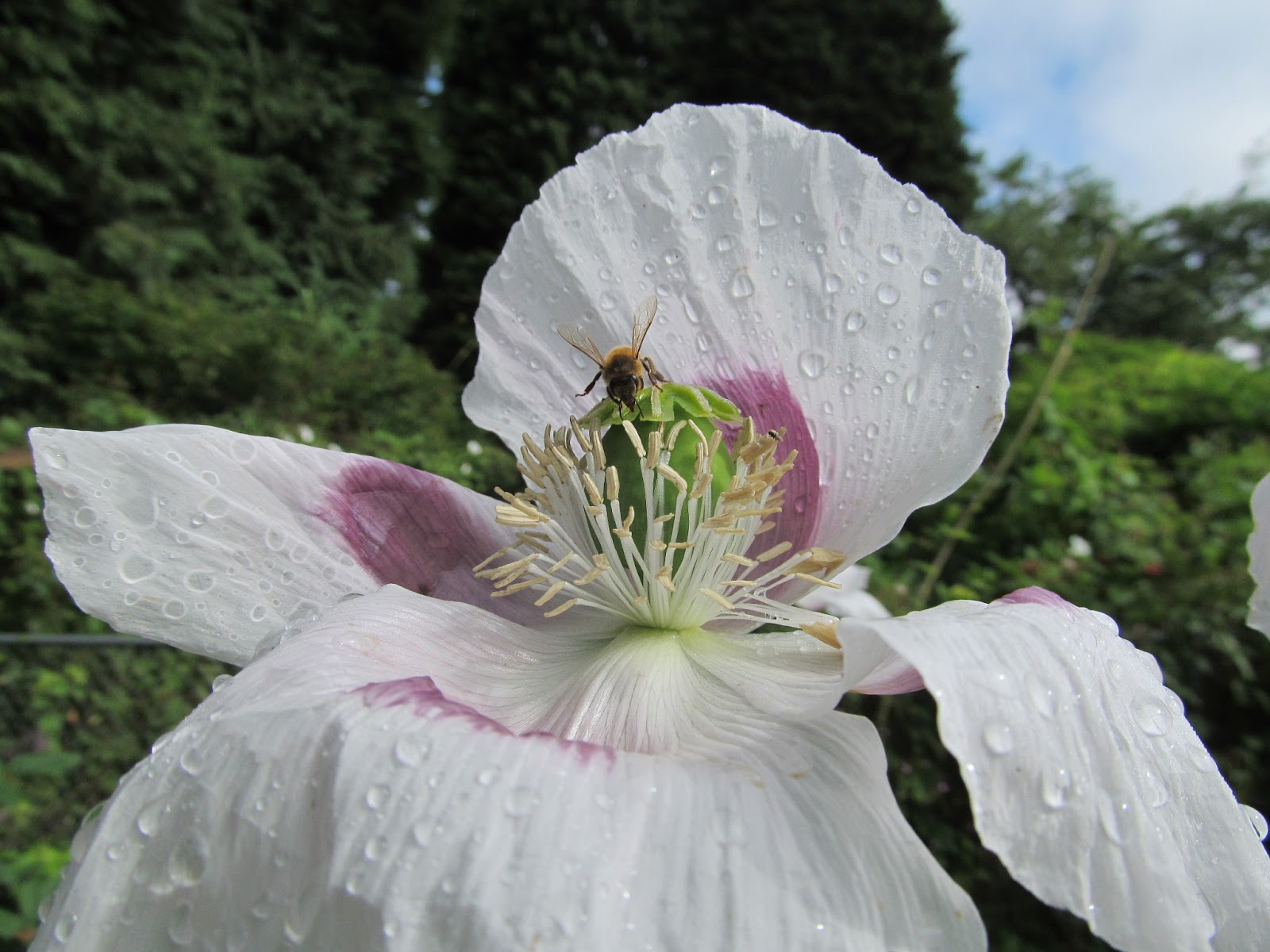
Outside, meanwhile, in the reality-based community, Nature reveals herself more slowly. Even the ephemeral bloom of a poppy has a dance if you slow down enough to watch. The green parts, revealing a hint of petal one day, then the outer layer drops away, and the flower unfurls, shedding dewdrops and beckoning bees.


The petals' embrace becomes open arms. More bees visit. Wind shimmies some dew the the ground as sun leads the rest skyward.

The petals begin to wane, the danced-out anthers fade, and they drop away to reveal the next act, the seed pod. Because all this allure, the tempting and teasing, the growing siren call, leads to re-creation (any recreational enjoyment the bees or flower-watchers may experience is just the by-product). It's meant to be fruitful, not just gratify an instant.


A few days of promise, one glorious day of flowering (and deflowering), and then weeks of setting seed. Not as showy, but not over, either. The bulb swells, it's crown grows. Skin touched by the sun tans from green to silvery blue, more moon-like with each day. The crown clothes itself in delicate velvet. Inside, clinging roe becomes rattling seed, each one no bigger than the period at the end of this sentence, each one the source of next year's dance.

25 April, 2013

Roofline Foregrounds

The roof, the roof, the roof is on fire! Oh, no it's not. Just a cloud.
Sick of the Virginia posts yet? I'm not.

I have nothing more to offer here than a couple of shots with nice sky and vista, and a bit of roof in the foreground. It's a symptom of my obsession with the imposition of civilization's intrusion into landscapes (and skyscapes), perhaps a species of the old-school documentarian impulse to show it like it is, and not how it looks prettiest. Still, there is a beauty in the juxtaposition of nature's and humans' versions of beauty.


And here, a shot with roofline in the foreground, and then Thomas Jefferson's garden (a massive linear terrace replete with fancy resting house), before seeing the next hill (less sculpted than Monticello, but then again that treeless sward ain't natural either. Then, finally, plain old natural sky (if you can ignore the contrails).
 

22 April, 2013

Lion Rock


On a trail somewhere in the Blue Ridge there is this rock. Looks like a lion's face to me. That is all. 

25 January, 2013

Flu Cough

Vitamin C magnified, by Rudolf Bauer.

Eventually, even a house to ludditic as to have no cable, satellite or broadcast TV, no twitter account or even an RSS feed, not even a contemporary culturally literate person in residence, even that house learns that there is flu around. Worse than last year, maybe.

But that does not mean that the denizen of said house gets a flu shot. Said householder is not a militant anti-medicator, not a conscientious objector to the vaccine regime. No, he (me) just places his bets with evolution. Having bred already, he could drop off the face of the earth today and not lose the  evolution game. 

But the flu is unlikely to kill me. I don't spend much time swapping germs with the populace, and I feel like a bout of flu might slow me down a bit, but not enough to hospitalize me, much less threaten the survival of me or my genome. 

So I eat garlic, and chomp down on those delicious Vitamin C tabs I have. I wash my hands a lot, and don't lick people. Maybe I'll get the flu anyway, but then again maybe I would even if I took the shot, which is not completely effective and carries a small risk of causing the disease it aims to prevent. 

In evolution I trust.


30 December, 2012

Green Tree?


Every year before Christmas, newsrooms in cruise mode revive the great Real Tree vs Plastic Tree debate. Every year as Hannukah kicks off, my college room-mate attempts to understand why so many goy insist on killing a fir tree every year. After all, Jesus only killed a fig tree (Matthew 21:18-22), and didn't do it again every year.

In terms of appeal, fake trees win only among the extremely fastidious and the lazy, for whom cleaning up a few needles is too much of an imposition, so the articles in recent years have often focused on the environmental aspect of the debate. Initially, the ersatz Tannenaum contingent had the upper hand, asserting that cutting a tree down every year damaged forests, whereas plastic trees last forever. 


But nearly all live (then dead) trees now come from farms like this one, just outside of Olympia. People like me come and cut trees, and the farmer plants more. A recent study shows that if the tree farmers don't kill the groundcover plants between trees, such farms are good for carbon sequestration--not as good as a forest, but still significantly better than fields of annual crops or pasture lands (and bonus: no cattle farts), which is what most Christmas tree farms were previously.

In my case--recognizing that this will not be true in all parts of the country--there's the added benefit that the round trip to get the tree consumed less than a gallon of gas. Plus, I'm supporting the local economy, helping a farmer make ends meet, and helping forestall the loss of farmland to development. Because this is an ongoing operation, new trees replacing old every year, it's a relatively stable habitat for birds, deer, and other critters that like something between grassland and forest. No, it's not pristine, but it has some ecological value, and it beats the hell out of a lot of the alternatives.

Meanwhile, fake trees are made of petrochemicals and metal ripped from the earth, processed in factories that consume more oil and create toxic waste, packaged in cardboard boxes (killing trees! the horror) and more plastic, and shipped from China the trucked to your locality. The carbon footprint is large, and the sequestration value zero. If these trees lasted forever, the footprint might be amortized, but fake trees make their way into landfills, not from generation to generation. 
[A Digression: The same goes for ornaments on the tree. If you are stingy and nostalgic like I was this year, then you have ornaments that have somehow stayed out of landfills for decades. A bunch are made from Christmas cards and chicken pot pie tins recycled when I was in second grade, waylaid from the waste stream for twoscore years.] 

All this should be famliar to those of you who reard or read reports on the Real vs Fake theme before Christmas, but what about after? Fake ones go back in a box or into the garbage, so making them less environmentally harmful is a matter of holding on for as long as possible before trashing them.

For real trees, the environmental impact can vary a lot depending on what you do after the holidays. At one end of the spectrum, you  could burn it. Torching a dry fir can be a great show, but it exhales the carbon it breathed in from the atmosphere for years right back into the air in a few minutes. You could douse the flame before it consumes the wood and bury the charcoal, in which case the carbon could stick around for tens of thousands of years. 

Many counties and municipalities have programs to mulch Christmas trees. Olympia even comes around to pick them up. The chipped trees become mulch in parks and in some cases may be sold or given to citizens; this extends the useful life of the tree, provides a local source of mulch with a lower cost and fuel use, and ends up in the soil. Sequestration time varies depending on conditions and from needle to branch to bole, but again something is better than nothing, and the breakdown feeds soil microbes, fungi, arthropods, and so on--it is carbon recycling, not emission. 

I'm stingy with biomass, and would no sooner give the city my tree than I would my compost. At some point in January, I take the tree outside, stand and all. This being the maritime Northwest, it can stay there looking green and alive until April or May, and in years past I have placed to to seem like part of the landscaping. Some years, as Spring comes round, I cut off the boughs and lay them among the blueberries as a nice acidic mulch; I may come back the next year and toss the skeletal branches aside. The trunk gets tossed in back for the native blackberries to clamber over, and eventually to return to the soil. Other years, I remove the stand and toss the whole tree in back. Birds hide in it, berries climb through, and the soil beneath gets better year by year. 

I rationalize habitually, but in this case I really do think that my choice of tree and my treatment of it after the holidays is as good a way to go environmentally as most of the alternatives. A live tree, planted out after Christmas, would be better, but I don't own any ground to plant in, and I don't know many people who have the space to do that year after year. No tree at all could be better, maybe, but it sounds like no fun. Besides, I want my local tree farm to stay in business.

29 October, 2012

Some Mountain Photos


First, Silver Star. I saw this on a clear summer day. There was just enough wildfire smoke in the air to slightly blur everything. Normally, pastels make me yawn, and I like bold and saturated colors. But the almost impressionistic softness rapt me in happy appreciation.


Not far from the first photo, looking south across the river to Oregon, I caught sight of Mount Hood.  The cones in the foreground may be Boring Volcanoes, one of the best oxymoronic-sounding geologic names I know. 


On the same trip, returning home, I went through Chinook Pass for the first time. Just after peaking, starting down the west side, you come to this view of Tahoma/Rainier. Wordless.

23 October, 2012

Salt Water Creatures

Sunny Side Up, Sting-ey Side Down

It's high time I stopped harping on politics, eh? Take a minute to remind myself that I live in an incredible place that has natural beauty. A place where I can walk by the shores of the Salish Sea and see wonders. Like a big old storm-cloud of a jellyfish, raining down sticky stings, its heart aflame with yellow lightning. 

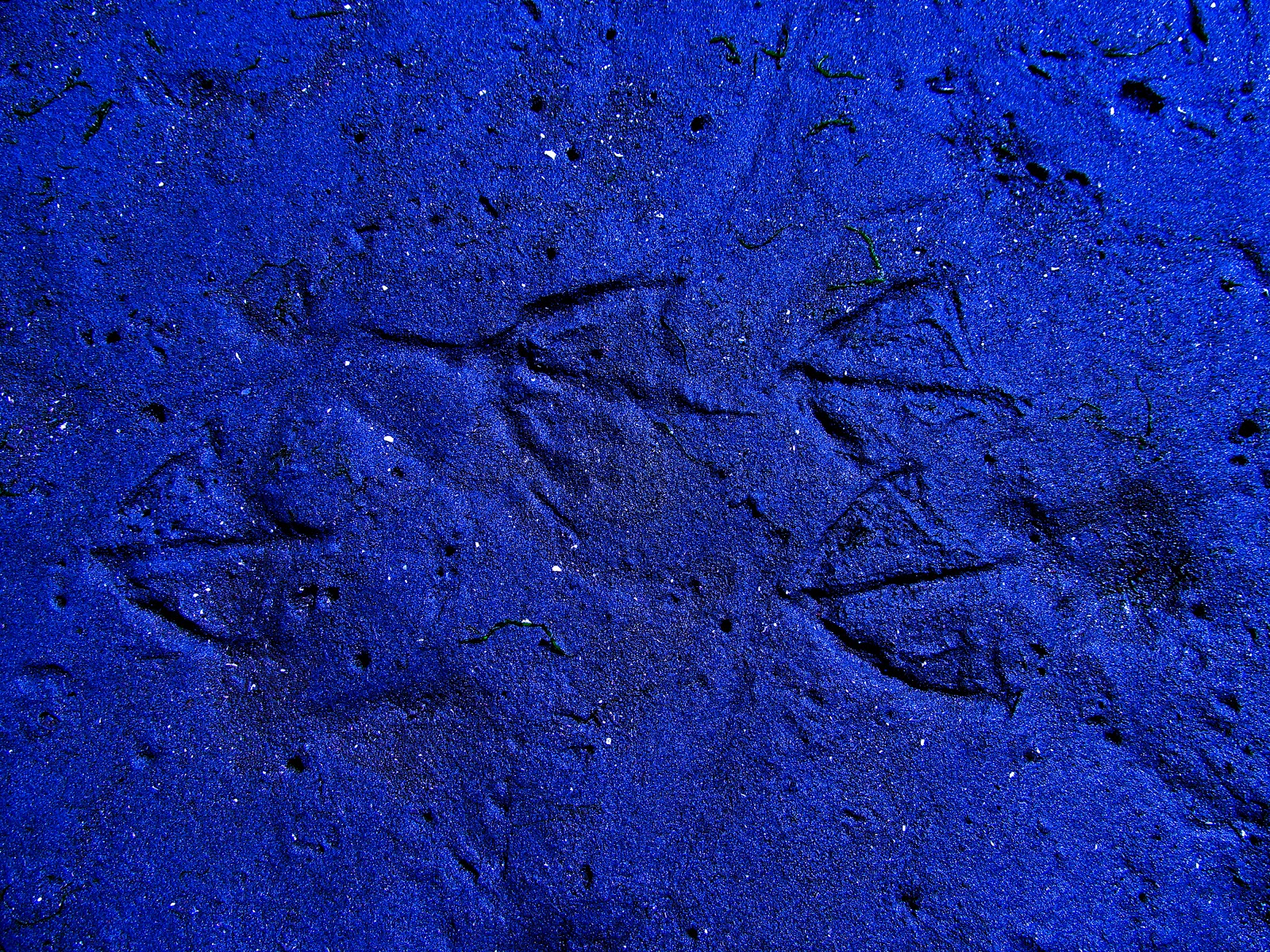
Pterodactyls with cloaking devices in a night sky, or just duck-tracks?

A place where ducks walk the mudflats, take off into skies, and land in the sea and lakes, stitching land, sky and water. A place where enough nature perseveres to remind us that we are all connected.


A place where I can salvage a countertop, carve it just for the halibut, and find an appreciative recipient. 

I love Olympia, my town down by the water.