Does the word that just popped into your head show up here? Find out:

Showing posts with label place. Show all posts

20 November, 2016

Your Local National Leaders

Brian Cladoosby*

America has elected its Drumpf, just as Weimar elected its Schicklgruber,** leaving many of us in a bind: Do we abide by the process? Do we accept a haranguer who hastens our  descent from international beacon of freedom to a dumb mob? Or, do we break the laws and smash the pipelines by whatever means necessary, risking another kind of dumb mob?

Maybe the answer, or at least an answer, to escaping the mobs is to look to the tribes.

Most Americans are unaware that they live on ground ceded or sold (or just stolen) from tribes that still exist. More than 550 tribes are sovereign nations, many with treaties that just happen to be supreme law of the land in the US. They are not subject to other states or even some kinds of interference from the federal government. Their own councils decide their own laws.

It's not that tribes offer some sort of arcane legal end run, or that they are some sort of haven where we could seek asylum. It's not that tribes have so much casino money that they've got political power over the rest of us, and I have no pretexts that tribes bludgeoned by our nation for centuries are all in peak condition, utterly unaffected by generations of enforced poverty and assimilation. It's not that tribal governments are always wise and never corrupt any more than tribal people are noble savages.

But it is that tribes, at least where I live and in many places I read about, are emerging as nations with talented leaders and strong visions for the future. Fawn Sharp (below), chair of the Quinault Nation on the Olympic Coast, is a national leader in addressing climate change. Beginning at home, she has worked hard to save the environment and look at how humanity as a whole can deal with climate change.

Billy Frank Jr. with Fawn Sharp
Where I live, the Squaxin, Nisqually, and Chehalis Tribes are my closest neighbors; the first two ceded the land where I live in the Treaty of Medicine Creek. All three tribes and dozens of others in what is now Washington State are active in funding projects that keep the salmon viable for all fishermen, environmental restoration projects that benefit the entire public, and public health programs that reach beyond the rez.

More fundamentally, tribes are places where the leadership has ties to the land and people that have never existed in US politics. When you serve on a council responsible for governing the small remnant of land where 500 generations of your ancestors lived, you may not feel so free to shift with the latest political winds. When your constituents include an extended family made not just of cousins and aunties, but salmon and eagles, you tend to look at the health of the whole instead of the profit of an individual. When you serve a nation that measures in the hundreds or thousands, accountability is much more immediate--it's hard to have elites who never touch the earth, who can escape the angry auntie forever.

Brian Cladoosby, pictured at the sop of this post, has risen as a leader of the Swinomish Indian Tribal Community, of Puget Sound tribes, and for a few years now as President of the National Congress of American Indians. But he still participates in his community. He fought the dentists lobby to bring free dental care to his tribe. He's opposing petro-trains that pollute Swinomish lands and waters and cut the community off from the rescue squad. And he's working with a broad coalition of tribes to address pollution and climate change on national and global scales.

At Standing Rock, a less formally governed tribal super-nation has emerged. Hundreds of tribes have converged to join with the Great Sioux Nation to try and stop an oil pipeline, a great black snake that many of them have known for generations would get out of control and poison the water. Maybe because it's rooted in a particular piece of land, this encampment is more focused and ultimately more powerful than the Occupy camps of a few years ago. Maybe it's because the environmental struggle, and specifically the fight to keep oil and coal in the ground, is at once globally imperative and locally relevant. The Water Protectors are leading a non-violent and deeply revolutionary movement, and this time it's not the white career environmentalists calling the shots.

Meanwhile, back on what's left of the Reservation, Councils are mulling over what the Trump Presidency could mean. He fought dirty with certain tribes when trying to protect his Atlantic City casino interests, and he may well have animosity toward Native Americans in general for their apparent congeniality with Obama, Bernie, and Hillary. The GOP congress is inclined to cut spending, so the already watered-down federal gravy train will likely deliver even less in the future.

But then again, the Republican hatred of big government and desire for local control could result in tribes having a greater say on federal lands, especially where they neighbor reservations. Sure, the Right would prefer to just privatize everything, but tribes have long histories and deep experience with land disputes and federal courts, where they are sometimes astoundingly successful (even if it takes decades to translate into real life benefits). Many tribes have already been working with federal land managers on cooperative management of everything from huckleberry patches to wildfire response. So even if President Trump wishes to dismantle the US, tribal precedents and politicking and organization may just cut him off at the pass.

Wherever you are, find your local tribe. Learn whose land you're on, and whose descendants are protecting it. Get to know them, and what they do in your community. Visit their community, and support it. Work together to protect your part of the earth as they always have, with an eye toward generations yet unborn. Join your local sovereign nation in spirit, and our American Nation will benefit.


* My apologies to Swinomish Tribal Chairman for placing his photo next to my rant, but as a public figure this kind of thing will happen from time to time, and he's not the kind of guy to unleash a 3AM tweet-war against me, so here goes.

** Adolf Hitler's dad changed the family surname from Schicklgruber. The Donald's grand-dad anglicized Drumpf to Trump.

09 November, 2014

Woodpecker D Adze


This is an adze that I made in more or less traditional Salish style, what anthropologists call the "D-adze" because of the handle shape.


The blade was made from a chunk of serpentine I picked up from a road cut on Cypress Island, ground down by rubbing it on concrete. Lashing is split cedar root over pine sap. The wood is the only non-local material, being from a black walnut board my dad bought decades ago in Ohio (which has been dragged to Virginia and now Washington, awaiting the time when I'd figure out what to do with it).


Salish adzes were sometimes adorned, and I chose to put a woodpecker head on this one. At first, it was because I wanted to stick with a fairly literal image (woodpeckers being carvers, like adzes), since I don't know enough about the person or Tribe I was making it for to choose something for its cultural significance or meaning. On the night before I gave it, though, I ran across a story of Dokwibatl, who came across a man who was trying to chop down a tree by banging his head on it, and transformed the poor human into a woodpecker. My intent with this gift was to honor a man who helped in my transformation from ignorant outsider to reasonably competent Northwest archaeologist, and so the woodpecker seems apt.

The wood that became this adze handle came from the same board that I carved into a sturgeon years ago, and which I gave to the Chair of Lower Elwha. The adze went to the Chair of Swinomish (who is also president of NCAI these days), with a special thanks to the THPO of that tribe. In between, another sturgeon went to Nisqually, a big halibut serving tray to Suquamish, and a stone fish club to a young Skokomish fisherman.

I'm not a talented carver, but not a horrible one either, and I still have all my fingers. I have not even attempted to match the Native Northwest formline style, and may never feel adequate to do so. I've never sold a piece, but I enjoy giving them away, and feel like I've been paid more than enough by having the chance to give them to host Tribes and have them be accepted. It's a lucky life.

08 January, 2014

The Highest Tide

Mission Creek, King Tide 2013

This past weekend, Puget Sound experienced the "King Tides," the highest tides of the year. According to the NOAA tide prediction tables, the Olympia Shoals station would reach 16.56 feet on Saturday, and 6/100ths lower on Sunday.

Olympia author Jim Lynch, it so happens, wrote a novel set here that he called "The Highest Tide." It's a great book, for many reasons. Way down the list for most people, but interesting to me, is how the titular event, a very high tide, fails to conform to predictions, but enlists a low pressure system and prodigious rainfall to flood above expectations. Something similar happened last year, when February's highs exceeded January's braggy "King" tides. Tides are set in motion by gravitational forces in our solar system, and as such are events that we can track with physics and math, but only to a certain precision, beyond which accidents of history hold sway.

Budd Inlet, 8:08 AM, January 4, 2013

This January, we were influenced by high pressure, and there had hardly been any rain at all, so maybe it was just a Jack Tide. Still, dozens of people showed up downtown, where they could see the floating docks at Percival Landing approach a horizontal state. Surely there are plenty of photos of downtown king tides online, among which I will point to these, because they show the nearly 20-foot rise that occurred between the midnight low (-2.99 ft) to the morning high (16.46 ft) on Friday.

The center of this shot is usually dry land.

My photos are from the mouth of Mission Creek, at the south end of Priest Point Park. I went there Saturday alone, and Sunday with the kids, and each time there were just a couple of other people. With the tide this high, the beach disappears, and a fair amount of the spit takes a dive. Last time the kind tides came round, they had to force their way through a culvert and into a silt-clogged former estuary. For many decades, that was how it went, a grand natural flow imprisoned in a 3-foot concrete pipe.

This time, the Salish Sea flowed free through a channel. This was because in 2013 the culvert was ripped out, the road berm damming (and damning) Mission Creek was dug up and hauled away, and a new channel was excavated. Designed by an engineer, and maybe not where the channel had been before it was covered, but the goal was restoration of the natural system, rather than creating space for real estate development or growing a crop that does not belong there. It is a well-intentioned fake.

As high tides sweep in and low tides flush out, the estuary may change. Silt once sequestered behind the buried sand spit will slither down into Budd Inlet, the channel may migrate, and the spits advance and retreat from either side. Critters will come in and explore the mud, and plant remains will hitch rides out on freshets and ebbs. The abrupt line of gravel laid out according to contract specifications may spread out and soften, or maybe the layer of bricks and rubble once buried by the modern beach will re-emerge. Who knows? It will be interesting to watch as the tides and other forces sculpt this work of man imitating a work of nature.

12 October, 2013

Agriculture and Bias

Orchards count as agriculture

In the past day or three, I've been reminded of how weird our understanding of agriculture is in modern America. Another blog that I regularly read, written by an educated, smart woman, linked to an article about the novel theory that the introduction of agriculture actually led to instability and population collapse in Europe. Then today, working with some other archaeologists and archaeologists-in-training, we talked about how generations of our forebears (and their cultural anthropology kin) have sworn that in the Northwest there was no indigenous agriculture or horticulture, just hunting and gathering.

Like most children of Western civilization, I was taught that the rise and refinement of agriculture allowed production of surplus, which was what allowed humanity (some of it, at least) to step off the dreary treadmill of subsistence, so that some people could become businessmen, priests, bureaucrats, artists, and all of the other divisions of labor that make up a civilization. Even among the cynical who viewed some of these jobs as blights upon humanity, there were few that argued the basic tenet that by making the transition from gathering and hunting wild foods (yes, in that order, if you are to be honest about where the calories came from) to farming domesticated crops represented an advance, creating some respite from the struggle for survival.

Only, if you look at it from an evolutionary point of view (so long, Bible Belt readers), agriculture does not provide stability. It is inherently unstable. From a diverse spectrum of wild plants, adapted to local conditions over millenia and more, people came to depend on a select and quite small group of species, using temporaryu success to grow larger human populations. Over time, this became more pronounced. Hundreds of wild starches gave way to dozens of grains and roots, and ultimately to a handful of cereals and russet potatoes, often grown outside their optimal range through generous application of non-renewable chemicals. Nomads moved to villages, which became cities and morphed into megalopolises. We stand now as the coyote did in the old road runner cartoons, over a canyon on a board nailed to a board nailed to a board, cantilevered so far out on a gamble that we are doomed to fall, unable to skitter back to solid ground. Evolution punishes monocroppers and urbanites who forgot how to find or grow their own food.

In our hubris, we have assumed that human selection can successfully replace natural selection, when in fact all domestication amounts to co-evolution. From corn's point of view, it has caused humans to adapt their behavior toward its own ends. We winnow down the gene pool to emphasize the parts that maximize kernel production, eliminating competition from weeds and even regional maize variants, maximizing acreage, extracting fossil fuel to fertilize and distribute the crop. Zea mays has domesticated and trained Homo sapiens to its benefit, not ours.

What amounts to genocide of other grains and the once diverse array of locally adapted cultivars of corn has resulted in such a narrow, patented gene pool that we are now at greatly increased risk of collapse in a major element of our food supply (and the same goes for soybeans, rice, wheat, and any other major food crop) should evolution create super-bugs, fungi, weeds, or diseases that could rip through the millions of acres planted in the same damned genome. Or maybe  the dirty work will be done by climate change, or the growing scarcity and cost of the chemical additives and artificial genetic alterations that are already deeply entrenched responses to the biological and climactic threats we already face.

Our smug modern bias that by replacing a "primitive" society (in which nearly every family produced its own diverse and locally adapted bread, vegetables, and protein) with a few corporately owned farms churning out the national output of food and food-like subtances is misplaced. Even before evolution engineers collapses in production, the elmination of diversity and removal of people from the healthful effects of working the land has created epidemics of heart disease, diabetes, and the other diseases of civilization that decrease individual fitness and create increasing drains on social resources. More angioplasty, less art.

Camas fields do not count as agriculture

But let's step back from that brink, back to the early days of agriculture. The domesticated crops all began as wild plants. As a young anthro, I was taught that this happened in a few select places: Mesopotamian cereals, Mesoamerican grains, Andean tubers, and a few others. While this select club would be expanded from time to time, membership rested on transformation of primitive forms to highly productive domesticates. People who ate "wild" foods were not agriculturalists, or even horticulturalists. They were foragers.

A prime example of that class were the indigenous tribes of the Northwest, who stood out among hunter-gatherers in having a higher level of social stratification and cultural elaboration than anthtropologists expected of tribal, non-agricultural peoples. Being an exception only proved the rule, however, since it was pointed out that a peculiar natural abundance of food, from salmon runs to camas meadows, was what allowed them to advance beyond, for example, their Great Basin counterparts.

But the more we look, and the more we listen to the Native cultures, the more we see that the Northwest tribes (and although I am ignorant of the details, I would have to suspect the tribes in other parts of the country) were not passive collectors of a random bounty. People burned meadows to return nutrients to the soil to such a degree that once-poor glacial outwash became black loam, while at the same time arresting succesional processes that would have liked to establish forest where berries and root foods grew. Harvesting techniques aerated the soil, gave next year's crop room to grow, rotated the burden of harvest, and propagated new generations of food. There was weeding and transplanting. Just because Tribal knowledge acknowledges first and foremost the role of Coyote for the origin of many foods does not mean that the actions of mortals played no role in the perpetuation of those foods. My suspicion is that the "wild" characterization of foods like camas and cous has as much to do with our lack of investigation as with absolute reality--the same people who weeded out the death camas, who harvested roots and berries over millennia, am I to believe that they never rooted out smaller, sicklier plants in favor of tastier or more productive ones? Are we supposed to think that because a food plant is found within it's "natural" range, it was not the result of transplanting or establishment of patches convenient to trails and settlements? I find that hard to swallow.

But our bias is that if a plant is native to its range (typically defined thousands of years after people began eating it, hmm...), it is wild. If it is not ridiculously oversized, the food part dwarfing the other elements, it must not be domesticated. If it is merely tended, rather than planted in rows or milpas, it is not agriculture. Our bias is that hard farming work, rather than knowledge of how best to feed off of natural systems with minor inputs, is superior.

We see what we want to see (I'll admit that I want to see humans who adapted to a place over millennia as pretty wise to its ways), and so Euro-Americans who conquered continents generally want to see that as progress. Casting agriculture as a noble effort, even as a single God's will that Man exercise dominion over the earth and its lesser creatures (Indians included), serves that goal. Defining what everyone else did as inferior helps make the stealing and subsequent transformation of the land more justifiable to most Americans, eases the guilt of wiping out thousands of little societies attuned to nature to make way for a large one attuned to itself. Bad as that particular bias may be, the one that may come back to haunt us more deeply is that other bias, the one in which we presume that civilization is always getting better, that we are exceptional, and our agriculture is smart and sustaining, rather than unstable, a dangerous taunt toward evolution.

06 May, 2013

"Carparchaeology" (I only wish I'd coined that one.)

My favorite historian (once Aunt Leila died), recently ran a series of posts about the recent spate of archaeological sites in British carparks: knights and ladies, no less than the bones of King Richard the Freaking Third, and what have you.

Historians are a bit less cynical than archaeologists. Probably a lot less, for we terrain-walkers and dirt-diggers know that the written record is biased, often composed and edited, and paid for by the winners; we demand physical evidence. Garbage, from the first dung-heap to yesterday's stratum at the municipal landfill, does not lie like the printed word. Individuals may destroy something or throw it away where they think nobody will know, but at a societal level, we can in fact know what they ate and made by looking at what they shat and broke. We can piece together what they did when the climate changed or disaster struck. We can see how much wealth inequality they could stand before it all collapsed into famine or rebellion.

Archaeologists may demand physical evidence as proof, especially for conclusions we can't cur (opposite of 'concur,' and another creative linguistic nugget invented not by me), but we also love to speculate. Although nobody is serving me a beer as I do so, let me speculate on why archaeology should keep turning up in the carparks of the British Isles:

  1. Regulatory - Speculatory, this reason, but I cannot help but think that Britain has a historic preservation review process that causes archaeologists to take a look before some new development. So you want to take that carpark and build something that requires a deep and perhaps ruinous foundation? Do some archaeology first before you destroy heritage. [Also, I like to do fake accents, and utter words like "Reh-gyoo-LATE-ree."]
  2. The Development Cycle - I may be making up this phrase, but it refers to something real. Carparks often turn out to be an interim phase between the old building that was razed and the new one yet to be built, a way for the landowner to make a few bucks while awaiting a better economic climate for construction. Or, they are part of an old farm or other "open space" being brought into the urban sphere, although again this tends to be a temporary phase, prior to a new commercial structure. In either case, enter Regulation before the new edifice arises.
  3. Stratigraphy/Taphonomy - Leveling the rubble of the old building or laying down  gravel and bitumen on a field are both additive processes, stratigraphically speaking. "Taphonomy" is just a bit of gibberish invented by archaeologists to mystify the public and protect our jobs, and it boils down to the things that happen to a site after the artifacts are originally deposited. Until very recently, in most urban settings, people cart away the valuables and the good building materials, and then either flatten out the ruins or deposit more stuff to make it level. Mostly, this causes the ground level to rise, which is how tells are formed. So it only stands to reason that a nice level carpark might have goodies (archaeologically speaking) beneath. Even in Leicester.
  4. Archaeologists are not all Adventurers - Generally, the majority of archaeologists would rather dig in their neighborhood than brave malarial swamps (or any swamp, honestly) or apply for a visa. [Disclosure: I am lucky enough to have found a swamp in biking distance from home, and have been digging there lately.] Consulting archaeologists recognize that digging a hole in a carpark is feasible, compared with tearing down the neighboring building and digging under its foundation. Professors tend to look for projects that can be accomplished near libraries and pubs, preferably with handy parking.
  5. Density - Writing from the Pacific Northwest (or as Asia would see it, the Pacific Northeast), where the oldest "historic" site is some moldering lumber from the 1850's, it is easy to forget that the British Isles, including some of their best carparks, have been overrun by building-building peoples for a relatively long time. Many cities there have past residents including East and West Indians, Victorians, Normans, Angles and Saxons, Vikings, Romans, and so on. So you dig a hole in London or York or any town that did not just spring up at a freeway interchange (or whatever those are called in Brittania), and you're going to intrude on the past residents. Again, things pile up.
So, there you have it. My not-quite-drunken list of reasons why carparchaeology is a promising field for any young archaeologist in regions urbanized for more than a semi-millennium. 

06 December, 2012

RVA Hardcore History: Death Piggy

During Reagan's second term, the Party purged the once-beloved Death Piggy
 
The internet has many makers of lists and databases, masters of arcanery and esoterica,  publishers of data and history. I'm not one of them, but sometimes I do pluck from this orchard when I bake up a blog, and I thank the geeks and rememberers of the world, who make it so easy for lazy people like me to delve into that most important of contemporary social issues: hardcore punk in early 1980s Richmond Virginia.

Today's graphic comes from the internet somewhere, in a corner I cannot recall. It's a flier for a...read it yourself. The Death Piggy logo underlying the "Banned" symbol, that perturbed swine sticking his tongue out, was ubiquitous in the early '80s, and archaeologists will discover the image when they sift through the rubble of VCU and the Fan. I drew it and so did dozens of other punks over a course of years: on jeans and arms, on bathroom stalls, on buildings and cop cars. OK, maybe I made up that last one, but Death Piggy was widespread, staring at passers by from DC to Raleigh, almost none of whom knew the hostile hog. 

Lots of people know about GWAR, that karmic joke on Dave Brockie, who concocted the band as a joke and was consumed, cornered in a world where people love him as long as he wears the costume, and who write off Death Piggy as proto-GWAR, trivia.

Not me. Then and now, Death Piggy is one of my favorite bands. They played a bunch of the hardcore punk shows, and I saw them a bunch of times. At least once, I left a show before the Famous Band would play, high on Death Piggy and not wanting to come down for a diva like Rollins or some big tall mohawk band of Brits.

Why? Because I guess to me Death Piggy was the most genuinely free music I'd heard. They could thrash, but also resort to a stoney echo or all kinds of other shit (I told you, I'm not a list-maker). The lyrics were absurdly entertaining, all the more so because the singer was a fluent and inventive singer of Cartoonese. Before being trapped by GWAR regalia, they just wore whatever felt right that day, no fealty whatsoever to black leather. When the band wasn't playing, they'd dance with the rest of us. Freedom.

Richmond's puerco muerto was eventually slaughtered by the dark overlords of GWAR, but the spirit lives on. It comforts the afflicted with the pleasing aroma of bacon, and whenever a punk kid is derided for not wearing the uniform, the spirit causes the derider to wet himself. And for those of us in the Virginia Diaspora, Death Piggy reminds us of days when Richmond punks were free, crazy, and in love with a piggy.

[NOTE: Were I a real blogger, I'd link to Death Piggy songs, or maybe just post a link with some pithy but twit-length comment. But I am not. There are a bunch of their songs on myspace and youtube, go get 'em yourself.]

06 November, 2012

We The People (Corporations Not Included)


I was not expecting to log in this soon, but it looks like the liberals are doing well. Instead of a day or week or month of recounts and challenges, it looks like Obama won.

But let's zoom in. Looks like the Democrats may win the governorship. The senate was never a question,...congratulations Maria. My congressional district, newly created, has gone for the Democrat. In the state house, my local senator and reps had no real opposition, so the liberals win again. 

Oh, and we voted to approve same-sex marriage and legalization of marijuana. Because We the People of Washington want those things. Maybe not personally, but we voted against archaic prohibitions.

The cool thing is that despite the Supreme Court's decision on the travestially named "Citizens United" decision, despite the 4:1 spending in favor of the GOP, money did not win. One person, one vote still won; while not united, citizens still decided the election. Americans appear to have not yet stupidified to the point where they will let ads rule. 

23 October, 2012

Salt Water Creatures

Sunny Side Up, Sting-ey Side Down

It's high time I stopped harping on politics, eh? Take a minute to remind myself that I live in an incredible place that has natural beauty. A place where I can walk by the shores of the Salish Sea and see wonders. Like a big old storm-cloud of a jellyfish, raining down sticky stings, its heart aflame with yellow lightning. 

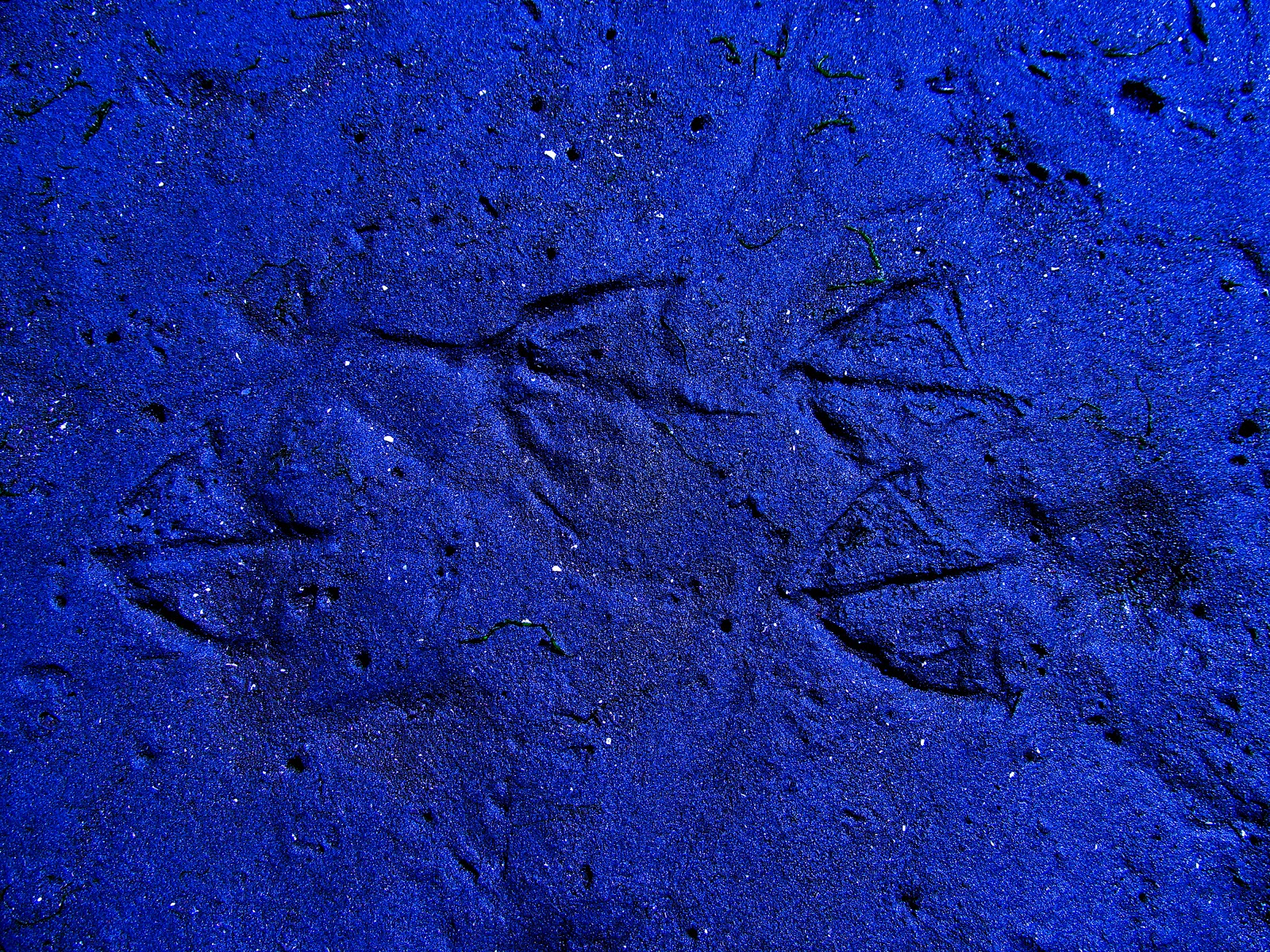
Pterodactyls with cloaking devices in a night sky, or just duck-tracks?

A place where ducks walk the mudflats, take off into skies, and land in the sea and lakes, stitching land, sky and water. A place where enough nature perseveres to remind us that we are all connected.


A place where I can salvage a countertop, carve it just for the halibut, and find an appreciative recipient. 

I love Olympia, my town down by the water.


04 September, 2012

Wings Over Cascadia


This past May, not that long after the snow had left, I arrived in a Cascadian meadow. Too early for camas and yampah, ground still pretty squishy, so I was jumping the gun relative to the traditional calendar that has drawn people up here since forever ago. But, this was when the opportunity arose, and I took it.


Likewise for the sandhill crane pictured here. What I've heard is that one or two show up at this meadow in any given year, but no breeding occurs. More likely, in the midst of migratory flight, it looks down upon this island of grass in vast forest, and swoops in for a closer look, a rest, a meal. The meadow is welcoming enough that it may stay the season, stop the flying and settle in on ground thinly peopled, a nature preserve in fact. Ironically, this meadow is the handiwork of millenia of human handiwork, a home occupied each summer while people dug roots, raced horses, traded, and did whatever else, including at some point setting fires that maintained this non-forested Cascadian oasis.


May may be early for the human foods (that I know of), and full flower is still a month away, but for the other creatures life is in full swing. Foliage and flowers have the small flyers flitting from plant to plant. This swallowtail may not be rare, and it takes no talent or acuity to find one, but I still feel fortunate to have seen so many of these fluttering paintings.


Some are more subtle, and the closer you look, the more you see. This moth appeared to be a caterpillar-pillaged leaf when I first saw it. Eventually, it grew uncomfortable with my gaze and took off on tattered wings while I stood, nearly stuck in the muck. 

That day, I meandered a mile or two. Not exactly trudging, but not flying either. The clouds of tiny insects, flocks of birds, and solo flyers all took their travels into a third dimension. This little plain of grass surrounded by mountains opened up a patch of sky so they could fly free under a warming sun while in the dank woods beetles crawl.


03 September, 2012

Signs, Signs, Everywhere Are Signs


Olympia is a mural town, but not every place has the fortuitous combination of big walls, owned by tolerant types, painted by an abundance of artists. Anacortes, for example, places cut-outs of citizens from various eras all around town. More organized and uniform than Oly's plurality of muralities, but then again, not exactly sterile and unimaginative, either.

The photo here illustrates this pretty well, plopping a hippie in the midst of a bunch of prohibition signs. Groovy. Makes that 70's song start running in my mind.

Indulging in my on-again, off-again obsession with visual anthropology, I offer these observations:
  • The juxtaposition of a hippie and his sign with the other signs suggests that the building's owner can take a joke (or is un-aware of it)
  • The "Sorry" preceding each prohibition perhaps reflects Anacortes' proximity to Canada's polite culture.
  • The hippie-among-signs motif causes an association with the song "Signs" for citizens of a certain generation. This song was by the Five Man Electric Band, which is Canadian. Most people won't know this, but that's just the sort of cultural imperialism--humble, subdued to the point of subliminality--that you'd expect from Canadians.
  • Wait a minute,...the hippie is holding a sign, suggesting a deeper irony or hypocrisy (or he is un-aware of it). And his shirt is neatly tucked in. Maybe he's a narc, man.

06 August, 2012

Pollen Ate 'er

Lip-ticklin' the nectivory
One of the pleasures of my work is to be high up in the Cascades, in a little meadow, baby I don't wanna come down. This episode of MT comes to you from yon mt. Back in the golden days of summer (right at the beginning, before it gets all parched).

The flying insects queue upon a faint aroma, or a UV signal, or maybe even some color so obvious that even us humans can sense it, and dive into a flower. There they stick in mouth-parts, suck to heart's content, and move on to find some other content (they are never full til the sun sets, in near opposition to us humans). Accidentally (they would say), they transport pollen, the DNA transfer proof of their slavery to the supposedly more primitive plants they serve. 

Suckin da bugga dry
Other times, the insects just settle in. From the Bible to the Exorcist, canonical wisdom tells us of the locust swarms arriving and marauding til nothing is left for us bipedal apes. More often, the leeching suckage bypasses us, especially in our modern dependance on the few crops agribidness allows us to eat. As in the aphid dairy pictured above, tended by ants on a lupine. They will not stop sucking vital bodily fluids (salutations, doc strangelove) until the weather turns or the host is dead. 

Is the pollinator a hero, and the parasite a villain? Evolution thinks they're both heroes. Perpetuation and selection both have their place. High up in the Cascades, nature turns on and tunes in, but will never drop out or give up.


21 June, 2012

Grass


Some while ago, I took to upon myself to turn a sunny westerly slope into Eastern Washington. Sure, Olympia lacks basalt and the interior's ferocious sun, but drainage was good and due to some oversight there was no second-growth doug-fir blocking the sun. In came a few plugs of prairie and some shrubbe-steppe-seeds. Sages tridentata and ludovica with whatever rhizomes and bulb hitchhiked in the root-balls. Camas (nevermind the single common name, this includes multiple species).


But one thing I've learned, is that if you aim to reproduce a meadow, a wild-esque prairie, you need to have a major grass component. 


OK. I learned that from reading books. Which--in order to be produced in sufficient quantity to reach an occasional book-buyer like myself--must be produced in mass quantities, and therefore subject to dumb-down market demands or a dedicated/devoted publishing house. Sometimes, I would like to think, I find a rare treasure of ethnobotany or farm-team Esoterica agronomus through sheer determination, but these cases are random, and I'm not religious enough to attach any particular significance to such revelations. 


Whatever doubt I may have about "the literature," there's no particular reason doubt the importance of grass in meadows, and so I've only weeded out the cheatgrass and that rhizomatous, centapedoid crap is that creeps in from the relict (and, were I to ignore it, revengeful) lawn. I've even gathered seed from certain grasses that look cool. One day, I'll get around to ID-ing the species in the photos above, but for now it is enough to know that I got some pretty Plateau grasses growing in Olympia (without too much ecologuilt, since species from over there will succumb to dark-damp cold before they can get to be too much of a problem on this side of the mountain, in an area already heavily disturbed).


If you waded through those ramblings, my apologies. Really, I just posted because I'd spent time tweaking those photos, and didn't want the time to goto waste.

17 December, 2011

Card Carrying Member of KAOS

I written about radio before, and am starting to suspect that it's going to be an altar in the temple of my curmudgeonhood. At the coming of aural autonomy, my preference was cassettes, probably because they let me record other peoples' music (piracy was more labor intensive in those days, but for every hardcore 7-inch 33, there were an ungodly number of cassette copies), and because radio offerings sucked at the time.


Now, that's different. Partly because the same social outcasts' flat out refusal to be told No led to a wave of low power stations, many of which fizzled, but enough of which survived to get their DNA on the air, where it has replicated ever since. The airwaves of 1980s Virginia, badly infected with commercials or stuck in chronic classical, are banished to space, where aliens hearing them may decide that there are no signs of intelligent life.


Living in Olympia and working statewide, the radioscape around me offers not just a pretty diverse genus of public stations, but community operated broadcasts. From Spokane to Skagit, on down the road through Everett, Seattle, Olympia and Portland, volunteers give voice to their place. People playing things you'll never hear elsewhere, people getting a chance to express or explore something that matters mostly in that small patch of earth. To have a station that adds diversity to their community invigorates culture and Culture. 

The local identity and grass-roots operation of most community stations are also, I think, important for democracy. Radio broadcasts reach people beyond wi-fi hubs and fiber umbilicals. Transmitters not owned by Clear Channel can air views unfettered by corporate mores. And if the time comes, know that the revolution will be televised, but only in between commercials, and you'll get better news on the radio. Oddly, the elder media spent much time this Arab Spring fawning on the democracy facebook and youtube, but radio remains and effective and cheap tool for freedom lovers.


Not free, though. Which is why I am a member at KAOS, Olympia community radio. Because it's not just that the call letters are hands down the best in the nation (sorry, KBOO), or the discounts kicked back at me from local bidnesses--I really do want to make sure community radio stays on the air.


KAOS brings us Democracy Now and other shows that would not be broadcast otherwise. They have not just Native News, but a great 4 hour block of native programming on Sundays; is there another station like that? And I cannot count the number of times I've cooked dinner listening happily to View from the Shore or Chant Down Babylon. The last thing I hear driving away from Olympia is usually static-scratched Amy Goodman. I tune in at random other times and get introduced to music from around the world, some of it so new it's live, but some harvested in the early days, most of it efficacious and restorative. 


So yes, I am proud to be a Card Carrying Member of KAOS. Are you?

29 August, 2011

Fear and Loathing (and bliss?!) in the San Juans.


Last week, I traveled to one of the San Juan Islands. Sounds like a place in Latino Latitudes, but they are our northernmost islands, ever since I stopped counting Alaska. After S. Palin said she could see Russia from there, oligarchniks have quietly been buying back pieces of it, and they now own enough land, oil futures, and moorages to have reversed Seward's Folly.

Meanwhile, down south, I sat on the deck of a small workboat, skimming o'er glassy waters on the way to my favorite island this side of Kaua'i. It was an international expedition, more or less, there being employees of two sovereign nations aboard, but tensions were low. My coffee buzz, borne of a 4AM wake-up and 2 or 3 hours of not-quite-as-fast-as-that-douchebag-in-the-BMW driving, was gone by then, and the remainder were northwesterners, cool enough not to let their 30% caffeine bloodstream affect their behavior. 


My job was to make sure a little hilltop was an OK place--archaeologically speaking--to plant a small weather station. I knew this would only take a few minutes, but was interested in what the reps of this other nation had to say about the whereabouts of a place that all of us agree exists, but none of us has been able to locate on a map, much less on the ground. Or, too many people have been able to locate it on a map, but they don't agree. Not violently, or even vehemently, more in the manner of a loss collective.

So there was no drama. No conflict. No more to write about.

So I ambled over to a place where some workers had been, uh, working. With big machines. And they'd gone where they were not supposed to. And obliterated some stuff. 

Irrevocably. Done. Nothing more to say.

So I continued to the south beach. Solo, toward the solace of data collection. The home of a man who invented a particular kind of mill saw, reduced for the time being to notes and numbers. Measured, sketched, GPS'd, until there are hours to rediscover the stories and graft them back to this bare limbwork. Sounds dull as it gets, but the uncreative busy work soothed me just then.


Moving on, it was time to climb. 600 or so feet up is the summit of a hill called Olivine, and for part of the way I followed old miners' roads, weaving twixt boulders loosed from earth but not barged away. Higher still, heading for a bald patch where I might have left a bag carrying camera and binocs, lost on the last trip here. In the camera, a memory card holding the only images of that place that had been torn away by machines. In the binocular lenses and dark interior, lagging photons showing 21 years of birds and cliffs, of places unreachable and just plain look-worthy. Memory and data, at waypoint 680. Maybe.


But only after crumbly cliffs and a final steep ascent under a sun as glaring as it gets in these northern islands (Not saying that much, Hawaiians, but acclimated me felt hot.) And there, in the place I had sat: nothing. No camera, no binoculars. Oh well. A pretty day, views down to the island (and a camera to catch 'em), the channels, more islands and straits, ocean. Boats unzipping wakes. A bell clanging in its language, inscrutably charming to my ignorant ears.


It was all downhill from there, beginning easily enough with a trail. Becoming a trace. Then just places less tangled than others. Then ever more precipitous slope, alternating between slick bedrock and loose talus made one by a moss skin over a skeleton of roots and rot. One leg carefully lowering my entire weight, then the other. Zig-zag switch-back, starting to wonder if I'd be back to the dock on time at this gastropodean pace.


On the other hand, it gave me time to appreciate the ancient fire-scarred trees scattered in this slanted forest. Occasional grandfathers, gnarled and interesting, surrounded by young'uns. 


I was looking up at one, it's branches akimbo with codgerhood and a disregard for verticality not tolerated in the tree farms and young forests I usually travel. Hunter S. had gotten that way in his old age, and years earlier had been nearly as curmudgeonly in his dismissal of amateurs one toke over the line, scoffing that until they'd dealt with the acid bats descending near Barstow, they had nothing to whine about.


And maybe getting all worked up over a hallucination is not that big a deal either. Imaginary bats swooping from the sky may be bad, but real yellow-jackets swarming up from their nest in the depths of hell ain't no picnic either. I'd been strung three times  before my body responded. They never really entered my vision, barely nicked my consciousness as anything other than pain when I took off in a clumsy cetacean approximation of running. Another sting, and realization that I'd be stung to death and devoured by the yellow-jackets at this rate.


I either stumbled or decided to jump, who knows? In any case, I looked down-slope and saw my feet before me, plowing downhill as I slid my butt across moss and logs, bouncing off rocks, pawing and clutching at whatever could help me steer this descent, maybe keep it from accelerating out of control (any more than it was). Extreme luge...sleds and ice are for panty-wastes. My mind thinking only of getting away from bees. Eyes pitching in by trying to spot a precipice before it was too late, and managing to do so.


Stop. Stand. Stung.


Again with the mad down-ward dash. Hop and lope, slide and hope. Managing to stick most of the landings and surf over a salal patch without it clutching me. Finally finding myself having covered a lot of ground, much closer to my destination. More importantly, out of the airspace of the squadron scrambled to chase me away. Not long after, I walked onto another old road, ambling calmly dockward. About 5 stings big enough to qualify, but no gashes, serious bruises, or broken bones sticking out of my skin. 


All in all, not a bad day.

11 July, 2011

Pleading the 5th

The flag says the wind is waking on this 5th of July. The sole sign of the 4th is an over-stuffed trash can, visited now by a raccoon who nearly tricked me into missing sunrise, but this is all aftermath. I'll get back to it eventually.

A glow through the curtain crack told me it was after 4AM, when the sky near the Canadian border wakes and stretches, scratches at the dark, itching to become dawn. My family sleeps; I slip onto the balcony to see the shift. This is my church.

Above, the celestial blue is deep, but shallower than bottom, already less than the darkest our short Summer night offers. The horizon rolls out red as I stare out toward sea level, maybe 20 feet below my vantage and stretching for miles across the Strait.

Straight lines, but none of them able to withstand close examination. First and most obviously fallen: the horizon. A seismographic line of dark beneath the red, mountains pushed up by countless quakes, volcanic peaks like Baker and Glacier stand in for the big events, while mumbling multitudes remind me of the lesser but commoner rumblings that keep the Cascades rising.

Just above, lines between blood red and bled red, between the warm hues and blues. Infinitely many and fine lines. All straight in my pitiful little human view, but arched across the planet's fulsome curvature. And just where are the lines between redder, red, blue and bluer? I cannot pin them down, each dissolves color into colour, moving as unchecked as the rotation of our sphere through aeons, never to be delineated.

The water's surface, could I see it off in the dark distance at the foot of the rising Cascades, would be as straight as it gets. Pre-dawn calm, glassy smooth, perfect reflectory for the light show and the jagged silhouette of the mountains. But curving around the globe, warped by tides, and at any close view too cleaved and waked, blown splashed eddied and flaked to be truly straight for even a few feet. Water flows and will not be imprisoned by plane geometry, though for a crystalline moment it may let you squint and imagine mirrorine perfection, time unmoving.

Over the next hour, the calm is invaded as the approaching sun awakes winds. First, rifflets--islands forming. Then an archipelago. No white-top chop, not yet waves, really, no undulating horizon, but still the glass has shattered, letting me know that the flatlining peace of the un-dawned day is about to pulse to life and light. Before too long the meditative reflections have been swept away: the schooner's mast rippled apart, the seismograph of hills even more spastic, the stars and planets lost again.

Still, there are islands of calm. Lees maybe, or less romantically, sheens of oil or whatever was in last night's fireworks. But the way the wind blows and the tide flows, and these islands of calm remain, I suspect they are the deep waters running still. In and around one, a seal's head and wake sketch dances on the surface, then disappear. A pause, and then another dance. Neverlasting, never over. A fishing hole, maybe, some mystery known only from the underside.

Closer, in the thin strip by the strand, a raccoon mama emerges from the rip-rap and scrub-brush to investigate a trash can filled beyond capacity by last night's revelers. My eyes obey evolution and look. The tableau beyond, no matter how sublime, cannot compete with the creature. Like a fly crawling across a master's canvas, it demands attention, at least momentarily making the human eye follow motion and forget art.

But not for long. I've seen a grander motion already, and resolve to focus on it. From peaks left of the big mountain, shadow rays have shot subtly through the glow. Fanning darker into the lightening sky, lines of blue hue washing the warmer colors, paradoxical announcement of light soon to come. My eye rides them down to their center.

And in a bowl twixt peaks comes a brilliant green flash. More than a flash, a growing bubble, bursting finally into the yellow curve of the rising sun.

And day dawns.

Quickly the red draws itself on a line west, beyond my view. Maybe at my zenith, still there for the watchers beyond Tatoosh, but soon enough passing them as well, racing across the Pacific, chasing away stars and dragging up winds in its wake.

The sun stabs straight at me, as it always will over water. This low, the glaring orb remains attached to the long ellipse of the blade, and for the first time I see the sun's first reflection as a paddle, the sun a knob on the handle, slender Salish style, dipping into the sea. And so starts another journey.

04 July, 2011

Garden 7: Volunteers


They come every year, volunteers. If they didn't, I'd despair at the bare areas. Even when their aim is off and I transplant them to another spot, I depend on these plants that come back on their own, no tilling or planting, no slaving at saving seeds and protecting them from damp weather and damned predators.

The volunteers just pop up. Some I've come to expect. The calendulas, dill, and red shamrock pictured above all fall in that category, just like the little Hawaiian currant tomatoes that I plant exactly once at each new abode, thereafter peeking between and beneath each Spring's growth to spot the volunteers that will ramble and rove, dropping enough seeds by fall to ensure the next generation. 

Some gardeners look down on volunteers and weed them out. Even varieties they like, they want from new seed or starters, placed in their appointed position. These may be the same folks who pray to a god for some particular outcome, who think that deity and power concerns itself with placing all the pieces of creation just so, with dictating their moves forever after. Me, I'm happy to be a lackadaisical creator, casting some seed and letting evolution take its course. Maybe now and then playing the vengeful god, ripping out a greedy weed, cutting short the life of an underachiever, unnaturally selecting out the obnoxious and weak. 

But then again, I tolerate a fair number of what some people call weeds. It might be different if I gardened in a more pristine environment, but I live in a residential development, in what was once an orchard in what was once a clear-cut in what was once a successional forest in what was once a prairie in what was once a virgin forest. Maybe not all of those, but a disturbed landscape nonetheless, where a red shamrock or a tomato does no real harm. If the weed be yummy, fragrant, or otherwise delightful, it is a volunteer.

In enough abundance, a patch of volunteers might be thinned into something approximating a row, but their nature is never so boring as that. A geometry more fractal and chaotic than linear, expanding sometimes exponentially, their math has what my dad always loved about that field, wonder and elegance, something very different than the cut and dried thing it is thought to be by the unimaginative.

Each volunteer is a mystery and a miracle. I never know how many there will be, or where they will emerge. Some, I don't remember having planted last year, or maybe ever. They may be gifts or offerings from the birds and rodents who also enjoy the garden. They may have awoken from some long dormancy, echo of a garden decades old. Some trickster may have planted them to see whether I could recognize a gift. Others reappear year after year, sensing that they are wanted and loved.

Every volunteer is a step on the evolutionary journey. Drifted from the carefully selected product of the seedsman, perhaps, but closer to being perfectly adapted to this place. Diversified and crossed, selected by nature so local it knows my yard better than anywhere else. Roots feeding hyphae feeding soil, growing a horizon particular to this garden, which will spawn who knows what new variation. Volunteers save us from the hubris of over-selection, from the trap of uniformity sought by the big corporate seed builders. 

And besides, who can hate something that pops up on its own, offering gifts? Whoever cannot love an echo that returns and blooms is deaf to the joy of creation.

18 June, 2011

Backroads: Grain to Hops, Hot Rods and Rattlesnakes

After a few hundred miles of winding through Palus country, it was time to high-tail it outta there, quit the wending and set a course back to Olympia. It would have been easy enough to hit I-90, turn on the cruise control, and join the flow of vegetative travelers heading west at great speed on the straight and not so narrow.

Screw that. Besides the boredom factor--Hay barns labeled in Korean and even the Columbia crossing have become uncomfortably numb--that route would dump me into the Pugetopolis traffic mire and force a traverse of Fort Lewis, where vital national security interests require perpetual slowdowns. Yeah, screw that. 

Better the backroads, which in this case gave me a crowier flight home, not too far north or south of the line from Colfax to Chehalis, leaving just a jot of interstate to endure on the final run north. Plus, I love going through White Pass, topping the Cascades on two lanes, usually with little company. And in this case, a chance to cover new territory, stretches of Routes 26 and 24 I'd never rolled through.
Amber Waves are for the Slow.
If my driving had meandered as much as this post, I'd still be on the road. But I gassed up, got a good dose of caffeine, and floored it. Climbed up out of the depths of Colfax, gaining speed, positively screaming once I'd negotiated the crossroads of Dusty, Washington. The wheat was high. No amber waves; amber is frozen. Green stalks bent back in the slipstream as I sped faster and faster, pushing an ever larger air-wake to either side. 


I'm pretty sure I reached velocity sufficient to distort the time-space continuum holding my brainpan, making the rolling hills seem to flatten out. Then, geography caught up as I passed Washtucna, heading plainward on an asphalt arrow pointing at Othello. I must've passed something interesting, but at speeds so great that all points blurred.


Hanging a left, 26 became 24, zooming down to the Columbia. Maybe slowing a bit, trepidation mounting. Because I was headed toward the contaminated Hanford nuke site, where scientists once made plutonium for bombs, and now they try to find ways to clean up the waste. Currently, the plan is to make it into glass and unload it on Chihuly and all the other glass artists inhabiting the Northwest. Look for a new line of glowing bongs.


Relax. Nothing out of the ordinary at the Hanford Site.
Windows rolled up, I made it through with no adverse effects. At least nothing that will appear in the near future. As an added bonus, I was not hit with any stray rounds from the Yakima Firing Range. And the road ran straight and smooth, as they often do in areas where federal dollars augment state transportation funds. Bottom line: gauntlet successfully run.


Rattlesnake Hills, Rattlesnake Clouds
Then, off to the left, the Rattlesnake Hills. Ancient, constant. The road follows the hills, skirting north of them as it approaches Yakima, keeping a respectful distance, or maybe just following the path of least resistance. I thought I was having a vision, hallucinating rattles on the tails of clouds that hovered above, but the photo says it really happened. Still, reality and natural (even scientific) explanations cannot convince me to write it off as nothing special. Atmospheric echoes of cartographic names? I love that kind of stuff, it's sustenance for a religionless soul like mine.


Mmmm...agriculture for beer's sake.
Yakama country (I suppose "Yakima" may be more accurate, this being outside the res in lands appropriated for newcomers) is famed for hops. In June, after a slow cool start, the vines race upwards almost as fast as I flew through horizontally; sticky tendrils grab the driver who slows too much in their midst. Left alone, these vines grow like kudzu does in my own homeland, but here they populate a tame tracery of wires and posts. I've seen hop patches before, but never the miles of fields that line 24 on it's approach to Moxee, a place named for the edible roots that preceded hops, but which is now growing more tract homes than anything else as change keeps moving. Root grounds to homesteads to industrial farms to exurbs. Progress?


Past Yakima, back onto 12, settling into a well-traveled path for me. Fast climb, faster descent. Another story.

Undulationland

Earlier this week, I had occasion to cruise Palouse country. Or Palus if you prefer--it still sounds the same. It means the region and the Palus tribe to themselves and their neighbors in Sahaptin languages, and falls within frontier rules for spelling of "pelouse," the French word for greensward, which also makes sense in this land of grasses. This is but one way in which the Palouse is hard to pin down.


Palus Country


Driving the roads through Palus country--261, 127, Whoopem Up Hollow Road, and others--you experience the shifting lay of the land, the tricks or perception and perspective. Rolling hills cradle valleys flat with silt and sand and wiggling only sidewise, canyons reach deeper to find big rivers. The hills have a bag of tricks to hopelessly confuse the traveler who strays off the beaten path, and bewilder even those who don't. They come in all sizes, but the hilly region is vast, so you start to think they are all a little bit different, but mostly the same. Often, nothing else breaks the horizon to provide scale, and what appears to be another smallish hill may take much longer to drive up or around, prying loose your visual from temporal.


Even with my habitual crutches--maps of paper and ether, memories of the satellite view pored over early in the morning--I found it easy to get disoriented and to doubt myself. Though the terrain undulates wildly on the human scale, all but the most detailed topo cartography fails to capture it; maps flatten the country to a degree that they are nearly useless for recognizing any one hill. Only where there is a big butte or where water has sliced deep below the surrounding hills do the contour lines reveal much. Except for the Snake's coulee and canyon runs, the rivers and streams tend to be the only level terrain, serpentine as you fly over and look down, but generally with less vertical relief than the cottonwoods lining them as they meander through flat-bottomed valleys.

Rivers Snake Through It
It is possible to wander the hills without ever finding the waterways, though, especially before the roads pierced the region. On foot, you may think you are following a draw that will eventually lead to a rivulet to a creek to a river, but you are just as likely to run into another hill. Go ahead and climb it, and see the next hill, but not much more. Only a few buttes offer you enough height to view over the country, and they are much farther away than your eyes lead you to believe; you may succumb to dehydration or frustration before ever reaching them. Life sustaining rivers like the Snake, the Walla Walla, and the Touchet hide below the horizon (a little easier to find than the Giant Palouse Earthworm), and of course the Palouse with its magnificent falls.


Inscrutable vermiform script crawls across the sky. Maybe prophets can read it.
The good news for wayfaring strangers is that navigation by landmarks is not all that necessary. The sky is huge, and unlike here in Olympia, visible most of the time. The sun ans stars broadcast directions. Jet trails and clouds seem to hang forever in the same spot on some days.

But for the most part, no wanderers roam the hills. Small roads wind among them, bigger roads shoot straight through. The Palouse is mercifully free of truly big roads, though, and even the main throughways like Route 12 are two lanes most of the way. The summer heat coaxes tar from them, and when the sun hits it just right, it shines. Mile after mile of squiggly lines, like Arabic writing under my tires--the moving car reads, and having read, moves on. Or maybe Tibetan script, my truck rolling over with it's prayer wheels.